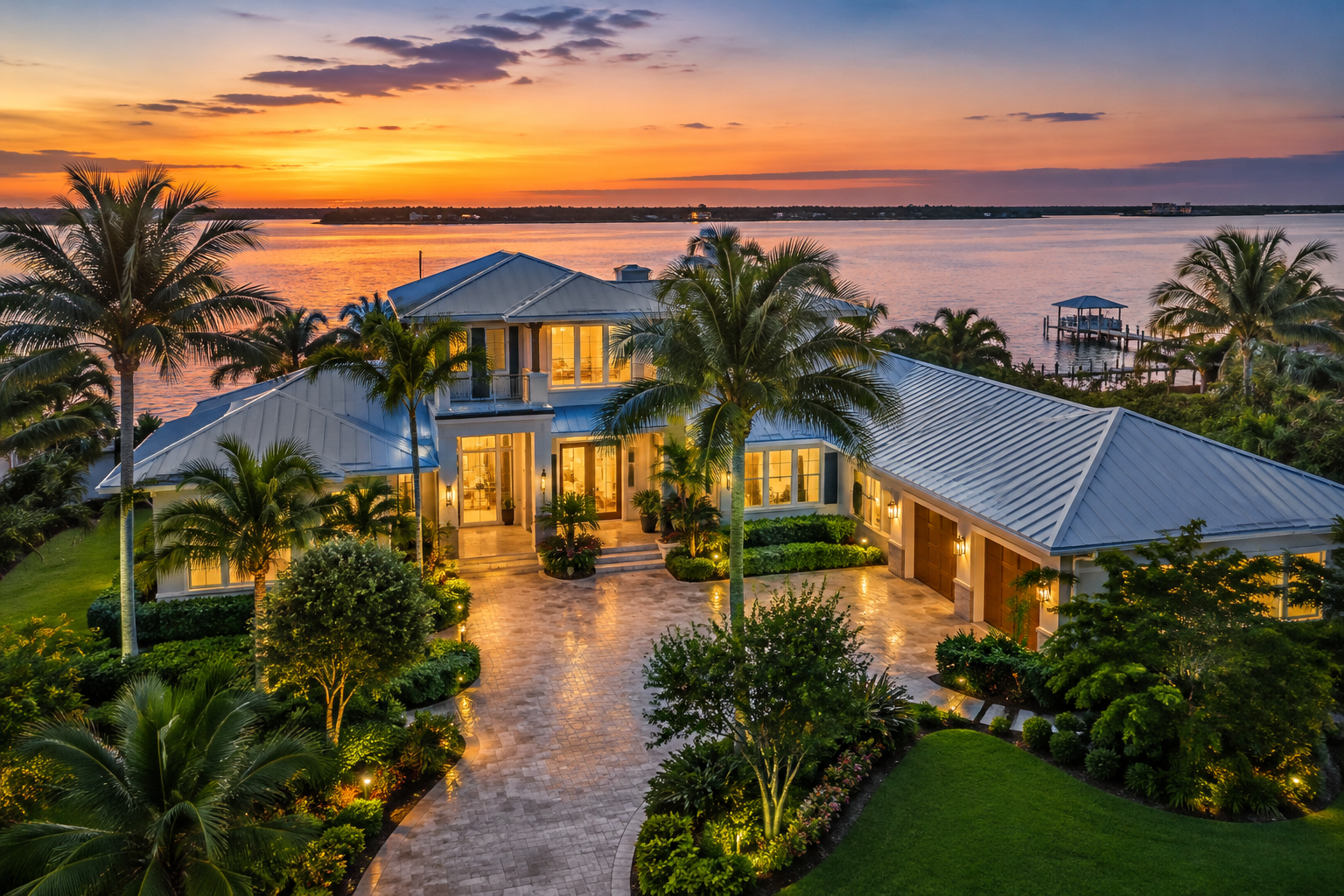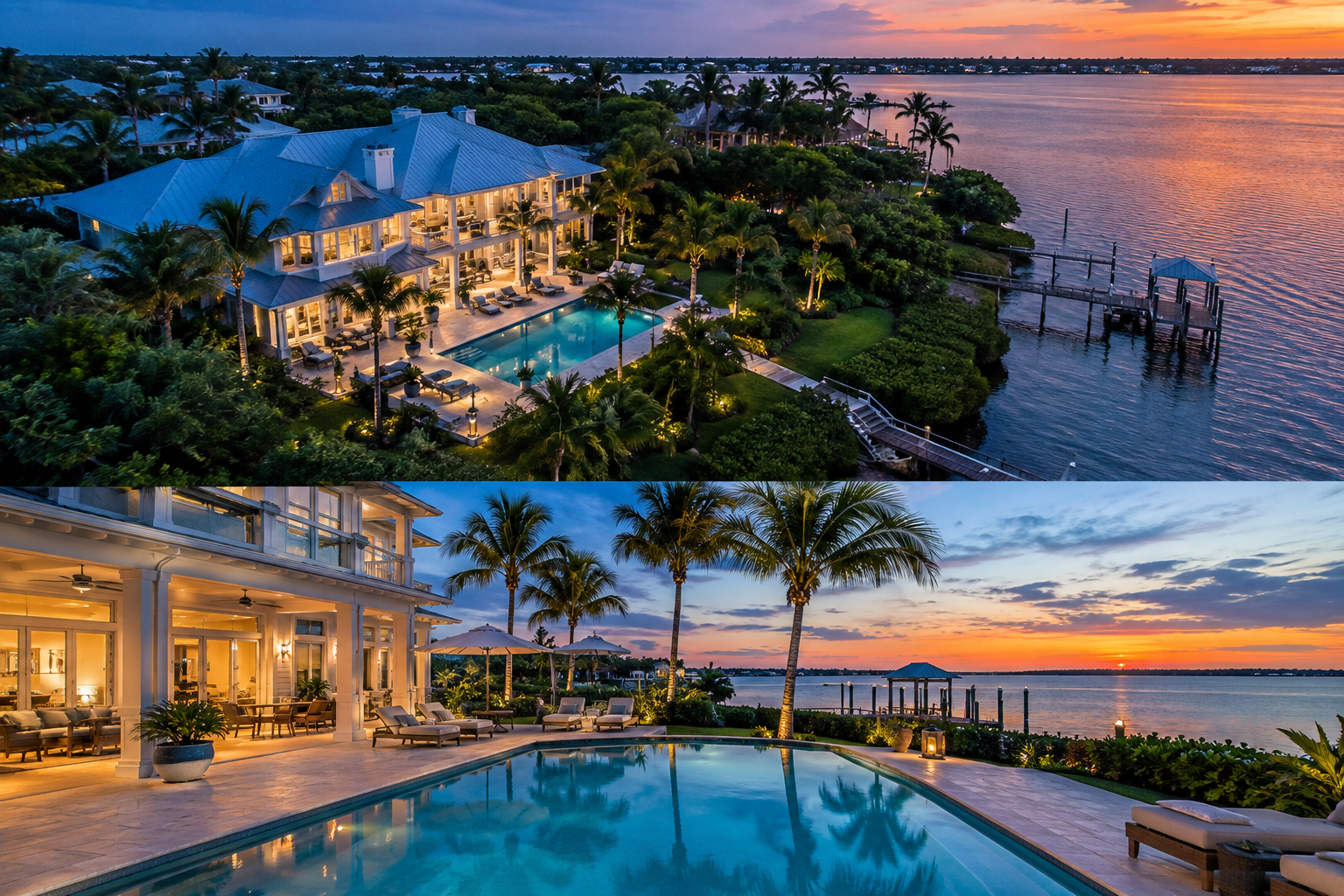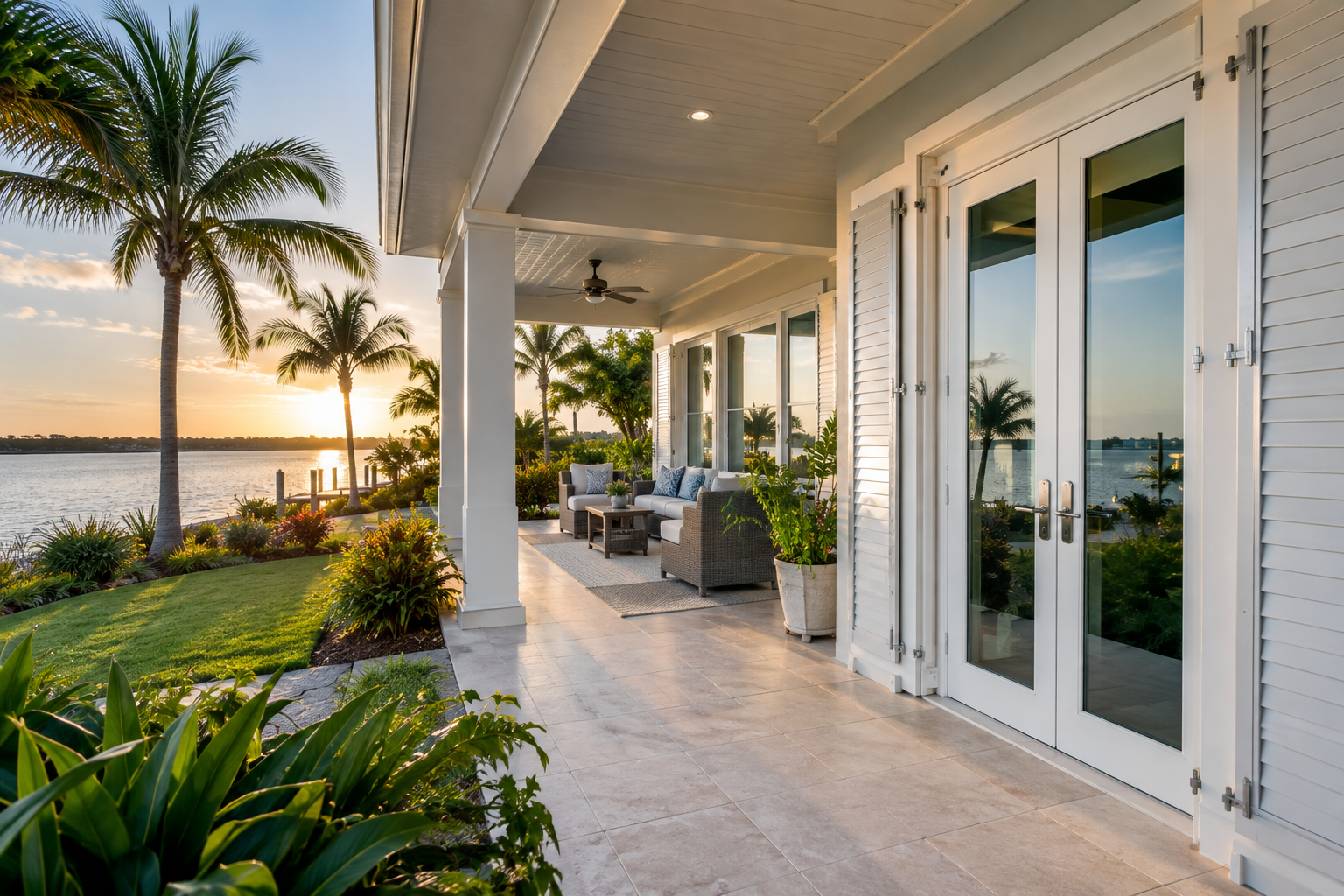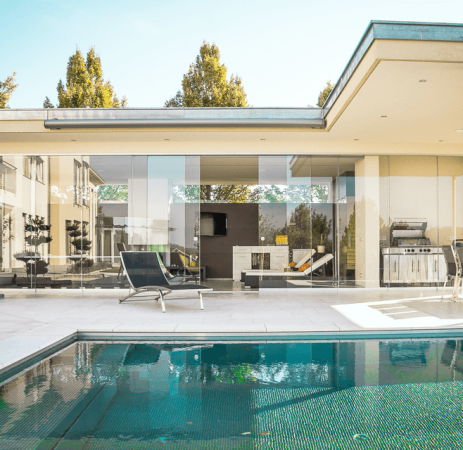
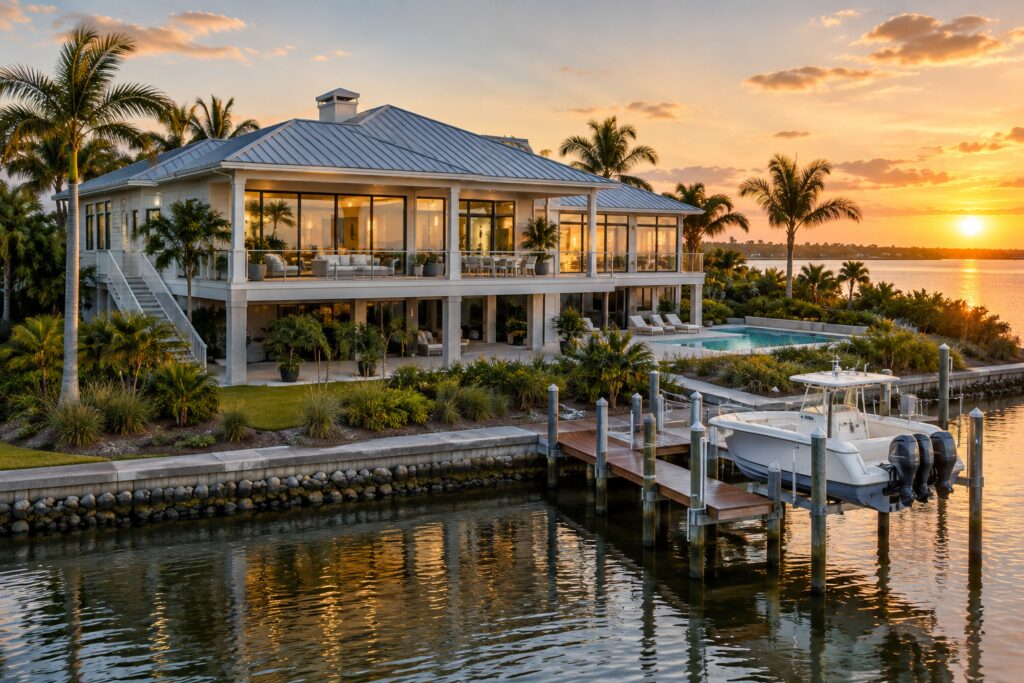
On Vero Beach‘s 32963 barrier island and along the Indian River Lagoon, a luxury waterfront purchase is not just about the view; it is about whether the house, dock, terrace, and envelope are engineered to survive king tides, salt spray, and the maintenance demands that come with a coastal address.
Elevation Strategy for King Tides, Storm Surge, and Daily Salt Exposure
Buyers weighing Oceanfront Luxury against Riverfront Estates need to evaluate elevation before they fall in love with finishes. In Indian River County, the best-performing waterfront homes are designed around the site’s flood profile, not the marketing photos. That means checking whether the main living level sits above the Base Flood Elevation, whether the garage or lower level is intentionally sacrificial, and whether mechanical systems have been raised well above the grade that sees repeated splash or seepage during seasonal high water.
Flood zone status matters, but it is not a simple yes-or-no filter. AE zones can bring very different insurance and documentation demands than X zones, and the difference can reshape long-term ownership costs on both mainland waterfront streets and select lagoon-front parcels. The practical questions are simple: Did the builder elevate the structure with a real flood strategy, or just add cosmetic height? Is drainage graded away from the house? Are balcony thresholds, pool entries, and patio transitions detailed to keep water from ponding against the envelope? On the barrier island, those answers are often more important than square footage.
Dock Permitting, Exterior Finishes, and the Maintenance Math Buyers Should Verify
On the Indian River Lagoon, a dock is a regulated asset, not a decorative amenity. Riparian rights, setback rules, piling placement, seagrass protection, lighting standards, and lift specifications all affect what can be built and how useful it will be once you own the property. A waterfront listing may advertise a private dock, but buyers should verify the permit history, any modifications, and whether the current configuration aligns with Indian River County requirements and any applicable state or federal approvals.
The same discipline applies to the exterior envelope. Salt air punishes weak materials quickly, so marine-grade fasteners, corrosion-resistant rail hardware, high-performance stucco systems, impact-rated glazing, standing-seam metal roofing, and PVC or fiberglass trim are not luxury extras; they are part of the property’s durability profile. Even a beautifully finished estate can become expensive if the balcony membranes, roof flashing, or window systems were selected for appearance rather than coastal performance. For homes that straddle the expectations of both coastal design and long-term resilience, the details behind the walls matter as much as the water view.
Four-Point Due Diligence Checklist Before You Buy
- Request the flood file. Review the FEMA map, elevation certificate, insurance quotes, and any prior claims history so you understand the home’s real carrying cost.
- Verify dock and seawall documentation. Confirm the permit record, riparian boundaries, lift specifications, and any restrictions that could limit future repairs or upgrades.
- Study HOA or condo records. For oceanfront towers and planned communities, review milestone inspection reports, reserve studies, special assessments, and insurance coverage before you rely on the association’s budget.
- Inspect the coastal materials. Check roof age, exterior coatings, window systems, balcony waterproofing, and corrosion at fasteners, railings, and mechanical equipment.
Final Considerations for Vero Beach Buyers
The strongest waterfront purchases in Vero Beach are the ones where the engineering, permitting, and association records support the lifestyle the property promises. A home on the Atlantic side of 32963, a lagoon-front estate, or a mainland waterfront residence can all be excellent investments, but only if the elevation strategy, dock rights, exterior materials, and ongoing maintenance obligations are aligned with the site’s real exposure. Buyers who verify those details early are better positioned to protect both their enjoyment and their resale value.
FAQ
How does an AE flood zone differ from an X zone for a Vero Beach waterfront home?
An AE zone generally means the property sits in a mapped special flood hazard area, so lenders, insurers, and buyers will usually expect more documentation, including elevation data and flood insurance analysis. An X zone is typically lower risk on the map, but it does not eliminate coastal exposure, especially on properties near the lagoon or on low-lying mainland lots.
What should I verify before assuming a dock or lift can stay with the property?
Confirm the permit file, as-built survey, riparian rights, seawall condition, lift capacity, and any HOA or condo restrictions before you treat the dock as a guaranteed asset. For tailored guidance and experienced local representation, connect with MacEvoy Real Estate Co. to protect your coastal investment.