
Buying in Vero Beach is not just a property decision; it is a timing decision that can affect your tax bill, your utility setup, and even whether your family lands smoothly on the right side of the mainland-versus-32963 choice. Buyers who move to Indian River County often focus on waterfront views or school ratings first, then discover that Florida domicile evidence, the March 1 homestead deadline, FPL activation timing, county water service coordination, and neighborhood-specific flood considerations can create expensive delays if they are not handled in the right order.
Start with domicile documents before you unpack a single box
Florida homestead benefits begin with proof that the home is your permanent residence, not just a seasonal stop. If you want to claim the Save Our Homes cap and the county homestead exemption, the paperwork should reflect the same story across every agency and account: Florida driver license, Florida vehicle registration, voter registration, and a residential address that matches your closing documents and utility records. The Florida Domicile step is where many new residents lose time, because they wait until after move-in to align records, then run into a March 1 filing rush with the Indian River County Property Appraiser. That filing deadline matters because missing it can delay the exemption until the following tax year, which is costly on higher-value coastal homes and especially on barrier-island properties in 32963. For buyers moving from out of state, the cleanest approach is to set your domicile trail during escrow, not after closing, so your homestead file is ready as soon as you are eligible.
Match the utility plan to the property type, flood zone, and neighborhood rules
In Vero Beach, utility logistics vary by location. Some homes are on FPL electric service and county or municipal water, while others sit within older neighborhoods that have different water, sewer, irrigation, or lift-station realities depending on the subdivision and incorporated boundaries. A mainland property in an X flood zone may offer lower insurance friction and more flexibility for renovations, while an AE zone home on the barrier island can require closer attention to elevation, utility meter placement, and wind or flood-related service interruptions. If you are comparing mainland neighborhoods to 32963, do not stop at the showing sheet; verify whether the water provider, sewer hookup, and irrigation source are already active or whether the account will need a new transfer, deposit, or field inspection. Buyers should also review HOA and condo rules before assuming exterior work or service upgrades will be simple. In a condo building, the association may control common-area systems, reserve funding, and milestone-related inspections, which can affect assessments, insurance, and the pace of any post-closing utility work. A well-run relocation plan treats Homestead Exemption and utility activation as parallel tasks, not separate errands.
Use schools and zoning as a family planning tool, not a last-minute surprise
Indian River County school assignments, private academy applications, and neighborhood zoning should be reviewed together before you make an offer, especially if you are deciding between mainland convenience and barrier-island lifestyle. Some families buy on the island for walkability and coastal access, then discover that the preferred public school option is better aligned with a mainland address or that private school commute times become a daily issue. Zoning matters beyond schools as well: setbacks, rental restrictions, parking rules, and renovation limits can vary by municipality, HOA, and condo declaration. If your plan includes future occupancy changes, guest use, or a home office, verify whether the property’s use is consistent with local zoning and association rules before closing. That is especially important in older coastal communities where drainage, canal access, and lot coverage rules may affect future improvements. The right Vero Beach choice is not always the closest beach access; it is the property that fits your tax strategy, commute pattern, and long-term household needs.
4-point relocation and due-diligence checklist
- Build your domicile file early: update driver license, voter registration, vehicle registration, and address records so your homestead application has a clean paper trail.
- Confirm the utility stack: verify electric provider, water and sewer authority, irrigation source, deposit requirements, and any account transfer timing before closing.
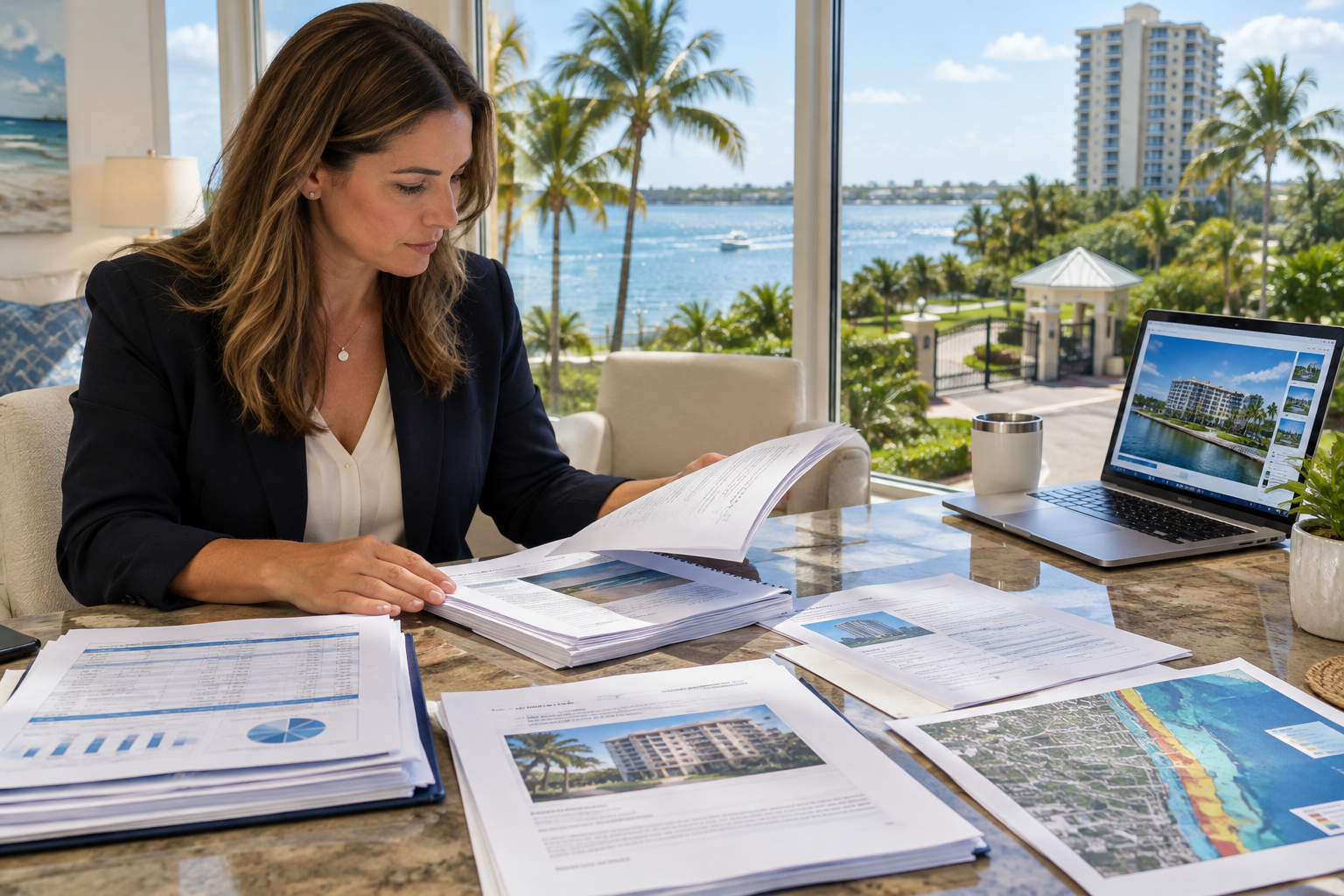
- Read the flood and association documents: compare AE and X zone implications, review condo or HOA budgets, and ask about milestone inspections, reserves, and insurance exposure.
- Align schools and zoning with lifestyle: map public-school boundaries, private-school commute times, and neighborhood use restrictions before you commit to a mainland or 32963 property.
## Final Considerations for Vero Beach Buyers
Relocating to Vero Beach works best when you treat the move like a sequence of coordinated decisions instead of a single closing date. The most successful buyers prepare their Florida domicile evidence, file homestead on time, verify the utility path for the specific property, and compare mainland and barrier-island tradeoffs through the lens of flood risk, association governance, and school logistics. In Indian River County, those details can determine whether your first year feels organized and cost-efficient or reactive and expensive. A careful first-year plan protects both your daily comfort and your long-term equity.
FAQ
When should I file for Florida homestead exemption after buying in Vero Beach?
File as soon as you have established Florida domicile and can prove the home is your permanent residence. The key deadline is March 1 for the current tax year, so waiting until spring can mean losing a year of savings.
Should I choose the mainland or 32963 barrier island if I am relocating with school-age children?
Choose based on commute pattern, flood exposure, association rules, and school placement rather than shoreline preference alone. Mainland homes often offer simpler logistics and more flexibility, while 32963 can deliver lifestyle advantages that come with stronger attention to insurance, flood zone, and HOA or condo details.
For tailored guidance and experienced local representation, connect with MacEvoy Real Estate Co. to protect your coastal investment.