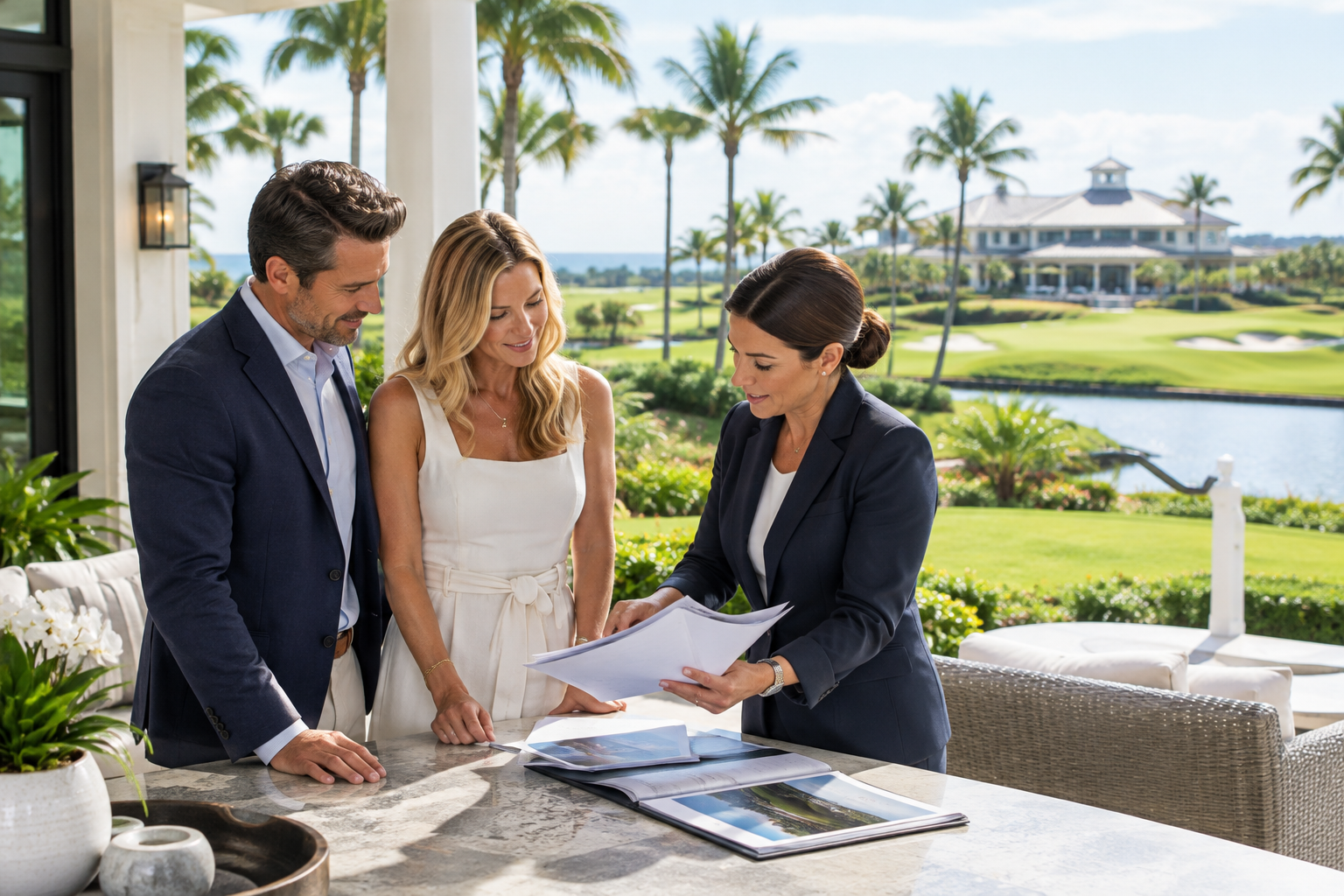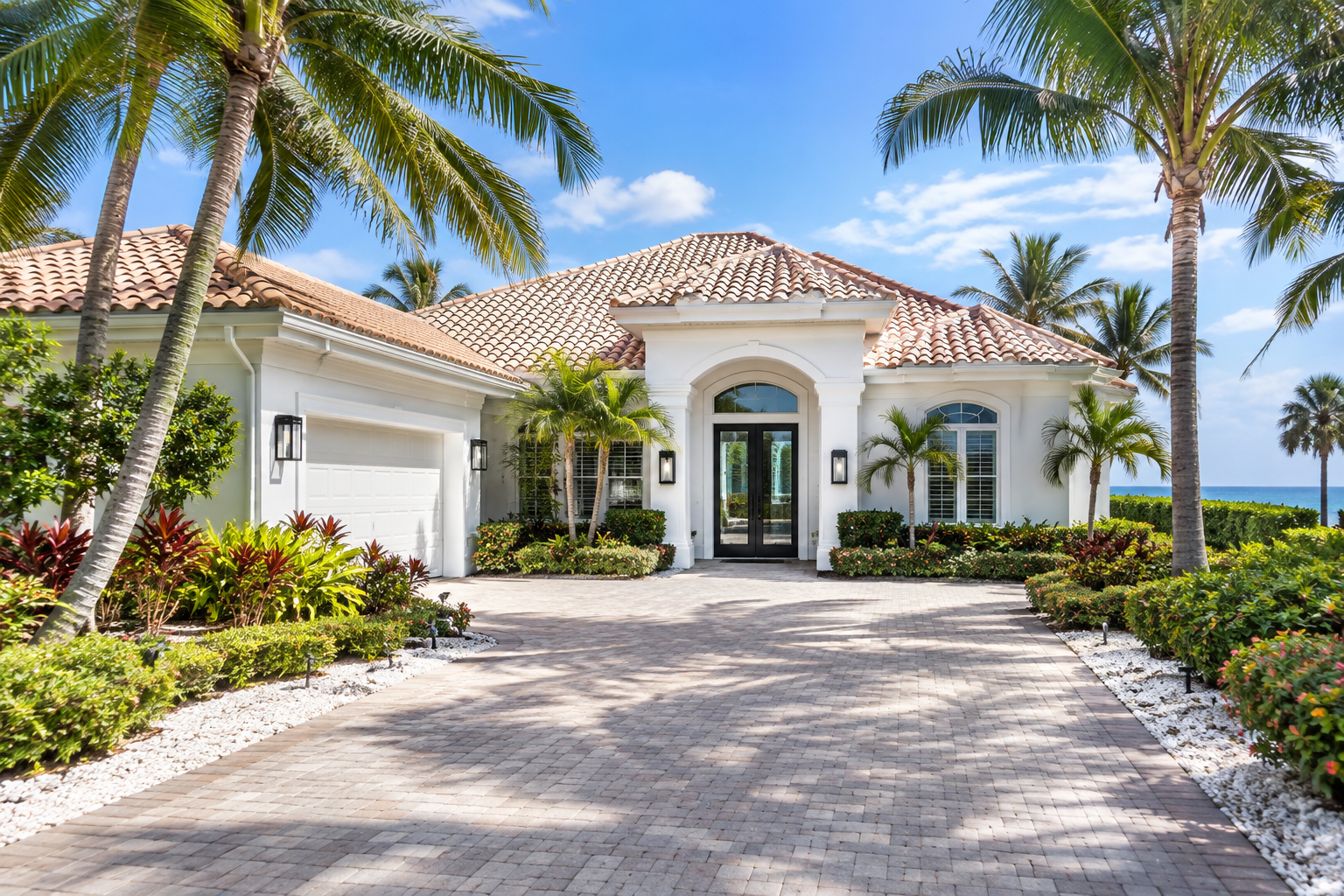
On the 32963 barrier island, seawall condition is not a cosmetic detail; it is part of the purchase price, the risk profile, and the long-term carrying cost of the property. In Vero Beach, a waterfront estate can look impeccable from the terrace and still carry hidden exposure at the edge of the lot, where tides, wave energy, drainage patterns, and prior repairs all meet. That is especially true for ocean-adjacent homes and Indian River Lagoon properties where concrete caps, vinyl sheet piling, and coquina riprap may have been installed across different eras and under different standards. Buyers who understand the wall system before closing are far better positioned to negotiate intelligently, budget realistically, and avoid inheriting a capital project disguised as a move-in-ready estate.
Prospective purchasers can explore active listings directly through our Vero Beach luxury waterfront estates portfolio.
How Vero Beach Seawalls Age, Fail, and Signal Trouble
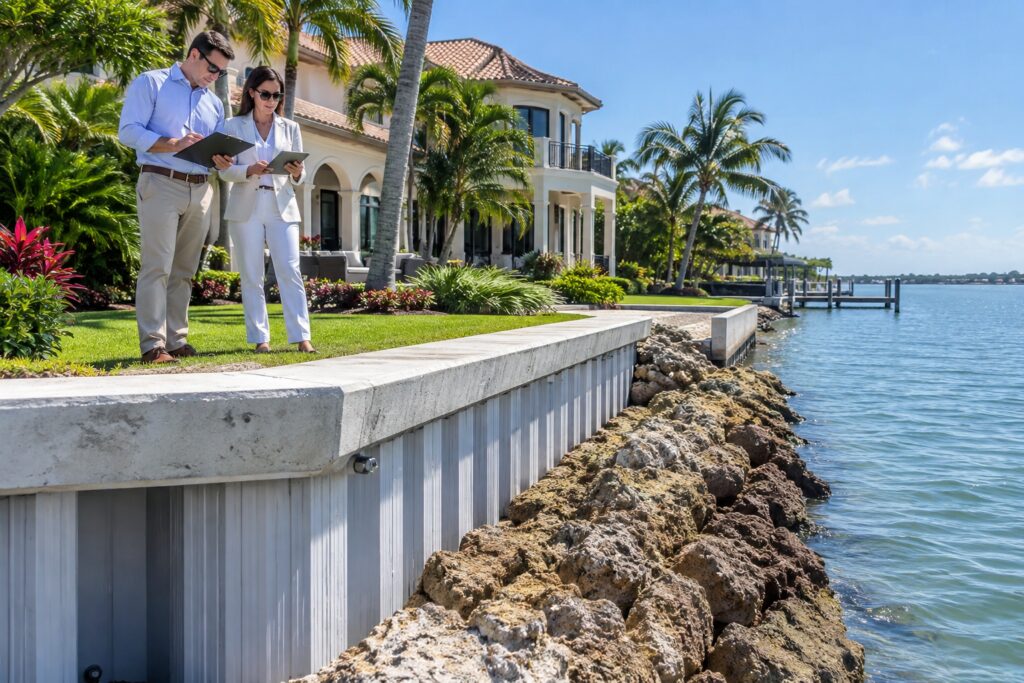
A seawall is only as reliable as its weakest component. In older Vero Beach neighborhoods, concrete caps often show the first signs of distress through hairline cracking, exposed rebar, spalling, or uneven settlement along the top edge. Those symptoms can point to corrosion inside the wall or movement in the backfill behind it. Vinyl sheet piling performs differently: it resists rot and can be durable in a marine setting, but it still depends on proper tie-backs, cap integrity, and installation depth. When the wall has a cap that is patched repeatedly, buyers should ask whether repairs are merely cosmetic or whether the structure is nearing replacement. On properties with coquina riprap, the key issue is not just the presence of stone but the stability of the slope, the extent of voids, and whether the armor layer is still aligned to dissipate wave action effectively.
Waterfront living extends across the barrier island’s dining, arts, and waterways, as highlighted in the local Vero Beach lifestyle guide. That lifestyle premium is real, but it does not erase engineering risk. A lagoon-side seawall may face different stress than an ocean-facing wall because of boat wake, tidal fluctuation, and soil saturation. Buyers should also pay attention to drainage outlets, weep holes, cap separation, and any evidence that water has been escaping through the landward side of the wall. If you see staining, sinkage, or fresh fill along the edge, the seller may have performed a quick patch after a more serious issue. In luxury transactions, the best assumption is that every shoreline detail has a financial consequence.
What a Pre-Closing Inspection Should Actually Confirm
The most useful seawall review is not a drive-by glance; it is a methodical inspection by a qualified marine contractor, structural engineer, or inspector with direct coastal experience. The review should verify wall alignment, cap condition, reinforcement exposure, drainage performance, signs of undermining, and evidence of prior permit work. A strong report should also note the wall type, estimated remaining service life, and whether the system appears to match the current load conditions on the property. Shoreline protection and structural standards are detailed thoroughly in our Vero Beach coastal buying guide. Buyers should treat that information as a starting point, not a substitute for a hands-on review. If a seller cannot explain the age of the wall, the history of repairs, or the contractor who last serviced it, that gap matters as much as a visible crack.
For high-value properties, the inspection should also connect the wall to the broader site plan. Is there evidence of upland drainage pushing water toward the seawall? Has landscaping altered runoff patterns? Are adjacent neighbors sharing a continuous wall, or is this parcel independently protected? In certain cases, the wall may look sound, yet the back lot slope or adjacent structure creates pressure that shortens service life. The best buyers use the seawall review to anticipate future capital expense, not simply to confirm that the property is habitable today.
Practical Buyer Due-Diligence Checklist
- Request the seawall age, repair history, and any available permits, invoices, or engineer reports before the inspection window closes.
- Hire a coastal-experienced inspector or marine engineer to evaluate the cap, sheet piling, riprap, tie-backs, drainage, and visible settlement.
- Budget for near-term maintenance by obtaining realistic replacement or remediation estimates, not just a seller’s casual assurance that the wall is “fine.”
- Confirm how the seawall impacts insurance, financing, and resale value, especially if the property has known shoreline repairs or unresolved defects.
Final Considerations for Vero Beach Luxury Waterfront Buyers
Luxury waterfront ownership in Vero Beach rewards buyers who pair lifestyle goals with disciplined technical review. A well-built seawall can preserve value, protect outdoor living space, and support long-term enjoyment of the property, while a neglected one can quickly turn into a six-figure surprise. The smartest acquisitions are made by buyers who investigate the shoreline as carefully as the interiors, because on the barrier island, the edge of the lot is often where the most important risk lives. For specialized representation across Indian River County, consult our advisors for buying real estate in Vero Beach. For tailored guidance and experienced local representation, connect with MacEvoy Real Estate Co. to protect your coastal investment.