Buyers touring a Vero Beach coastal property do not just notice the view; they notice whether the home looks protected, maintained, and ready for the Atlantic climate, which is why the smallest details on a barrier island listing can change perceived value fast. In 32963 and across Indian River County, a clean presentation starts with salt-air corrosion control, a polished look at hurricane protection systems, and an outdoor living area that feels useful in both rainy season and blue-sky weather. When those elements are handled correctly, the home reads as well cared for rather than weathered.
Make Salt-Air Wear Look Managed, Not Neglected
On the barrier island and along the Indian River Lagoon, buyers are accustomed to seeing oxidation on fasteners, railings, lighting, and lanai components. The goal is not to pretend coastal wear does not exist; the goal is to show that it is under control. A quick wipe-down is rarely enough. Scrub corrosion off visible metal, replace pitted hardware that draws the eye, touch up flaking paint on trim and gates, and make sure exterior fixtures have a consistent finish. If a buyer sees rust stains around anchor points or on screened enclosure frames, they often assume deferred maintenance extends beyond the surface.
This is where strategic presentation intersects with coastal home staging. In a coastal market, the most persuasive staging choice may be removing visual distractions that suggest future expense. That includes disguising or replacing mismatched bolts, tired door handles, dated coach lights, and corroded patio accessories. If impact glass is installed, clean the panes thoroughly and polish the frames so the windows read as a premium feature instead of a functional afterthought. If shutters are present, make sure they stack neatly, latch cleanly, and appear intentional from the curb. Buyers in Indian River County know how much storm readiness matters; they also know when a home has been maintained by habit rather than by reaction.
Stage the Lanai and Exterior Living Space for Real Florida Use
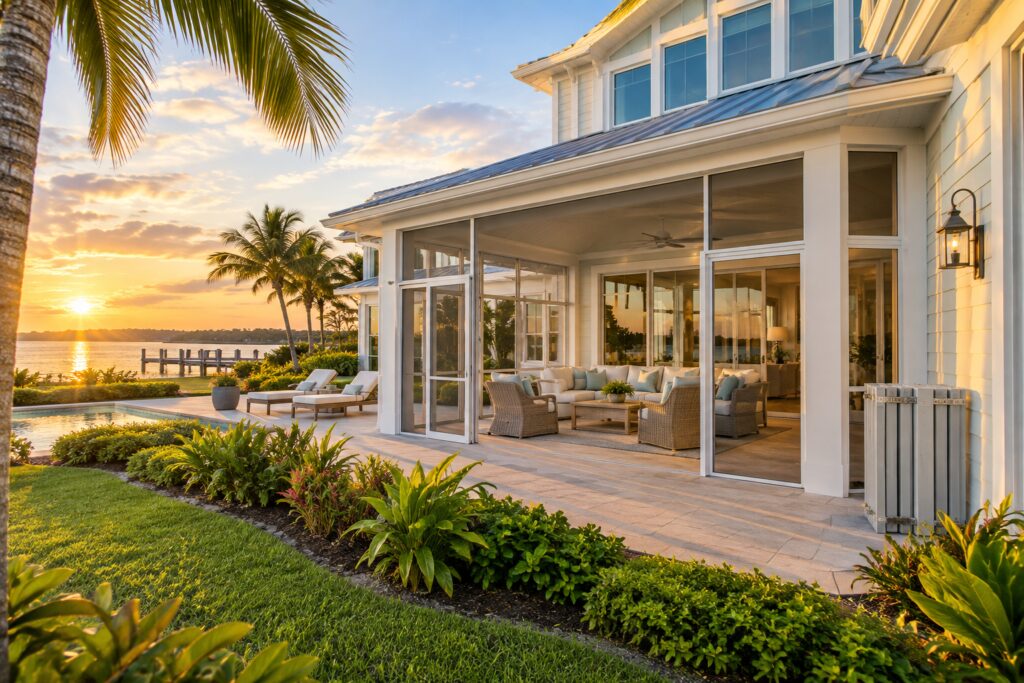
In Vero Beach, outdoor living space sells when it feels usable, shaded, and easy to maintain. A lanai or patio should look like an extension of the interior, not a storage zone for pool toys, spare planters, and weather-stressed furniture. Choose lighter upholstery that reflects coastal light, anchor seating around a clear focal point such as the pool, garden, or water view, and remove oversized pieces that make the space feel narrower. If your home sits near the lagoon or on a deeper setback on the mainland, the staging should emphasize breeze flow and sightlines rather than overfurnishing the area.
Natural light matters just as much outdoors as it does inside. Clean all exterior glass, wash screens, trim back landscaping that throws unnecessary shadows, and open every sightline that can make the home feel brighter. Buyers notice whether a home captures morning sun on the east side or afternoon glow on the west-facing lanai. For homes with shutters or storm screens, show them in their neatest stored position so the exterior looks orderly and well documented. If the property is in a condo or HOA community, review any styling limits before adding or changing fixtures, especially where associations have design rules tied to exterior finishes, enclosure hardware, or balcony use. That planning is part of smart hurricane shutters presentation, because buyers want reassurance that protection systems are both functional and visually tidy.
Barrier island buyers also pay attention to flood context. A home in AE will often be evaluated differently than one in X, and staging can help reinforce confidence by making access, drainage, and maintenance look deliberate. Clear patio drains, remove standing-water risk from planters, and keep walkways free of slippery algae or leaf buildup. On the mainland, the emphasis may shift toward showing larger yards, screened porches, and low-maintenance outdoor zones that still feel coastal without requiring constant upkeep.
Coastal Home Prep Checklist for Vero Beach Listings
- Replace or refinish visibly corroded hardware, light fixtures, gate latches, and rail fasteners before photography.
- Deep-clean windows, screens, lanai frames, and shutters so impact features appear crisp and well maintained.
- Stage the outdoor living area with fewer pieces, lighter fabrics, and clear view corridors to the yard, pool, or water.
- Confirm flood-zone disclosures, HOA rules, and any condo milestone-related repair documentation are organized for buyer review.
Final Considerations for Vero Beach Buyers
A well-prepared coastal listing in Vero Beach does more than look attractive; it tells buyers that the home has been cared for with local conditions in mind, from salt fog and afternoon storms to HOA expectations and flood-zone realities. When exterior wear is controlled, outdoor space is staged for daily use, and natural light is amplified instead of blocked, the property feels easier to own and easier to trust. In a market where buyers compare barrier island homes, mainland alternatives, and waterfront-adjacent properties side by side, that level of preparation can sharpen first impressions and support stronger offers.
Frequently Asked Questions
Should I replace corroded exterior fixtures before listing my Vero Beach home?
Yes, if the corrosion is visible from the curb, lanai, or primary living areas. Buyers in coastal Florida often interpret rust, pitting, and flaking finishes as signs of broader maintenance issues, so replacing the most noticeable items usually improves both presentation and confidence.
How should I stage a home with impact glass or hurricane shutters?
Keep the glass spotless, frames clean, and shutters neatly stacked or secured so the protection systems look intentional. Buyers appreciate storm protection, but they respond best when it appears organized, modern, and easy to use rather than bulky or neglected.
For tailored guidance and experienced local representation, connect with MacEvoy Real Estate Co. to protect your coastal investment.