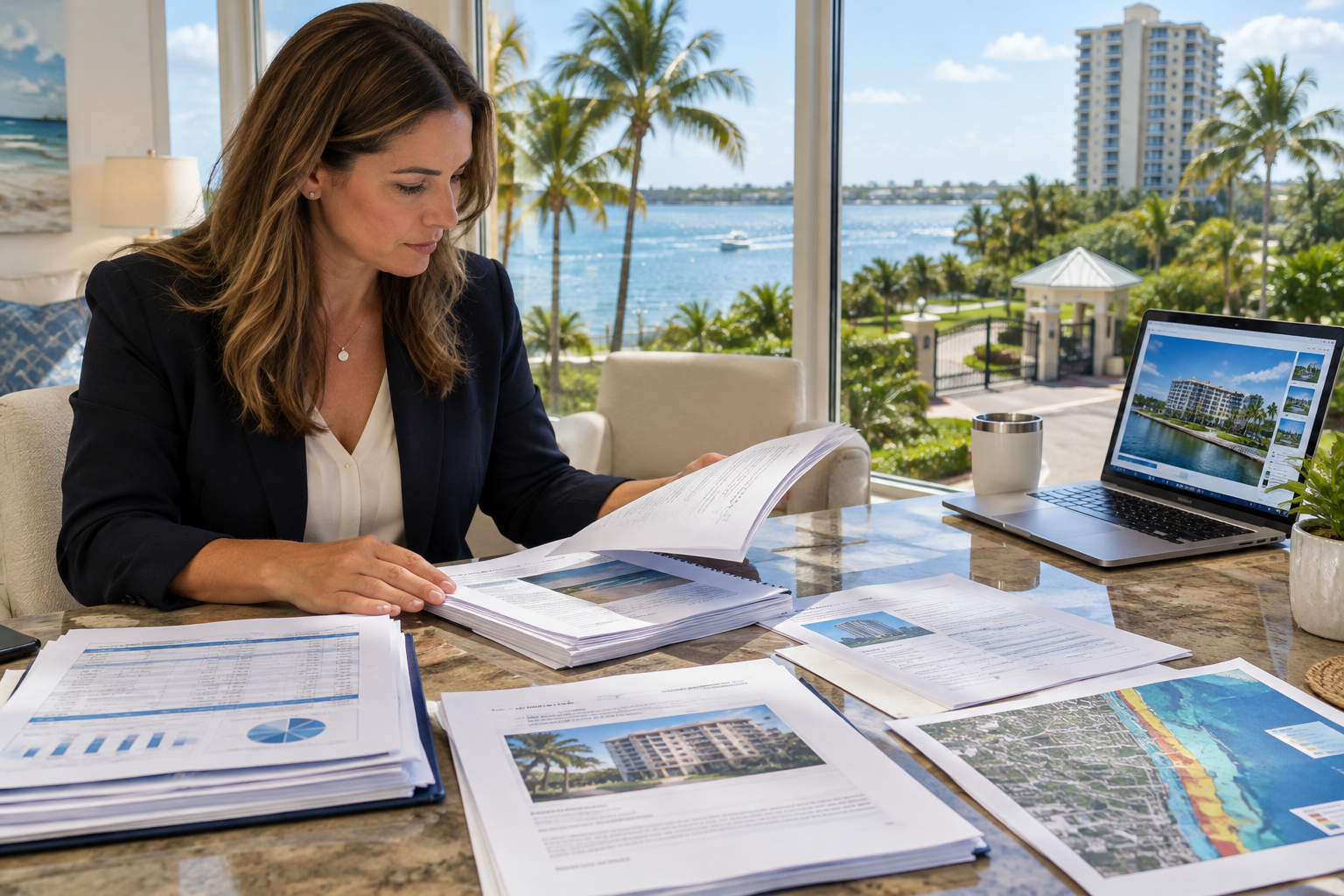

On a barrier-island purchase in 32963, strong income and a healthy down payment can still lose momentum when the file reaches the flood map, the condo documents, and the insurance quote; for Vero Beach buyers, that is where a jumbo loan becomes a coastal compliance exercise shaped by Indian River County realities rather than a simple credit decision.
Jumbo underwriting on coastal property is really about insurability, occupancy, and reserves
Lenders reviewing a high-balance loan for a home near the Atlantic or the Indian River Lagoon want more than standard debt-to-income ratios. They want proof that the property can survive Florida risk factors without forcing the borrower into a payment shock. That means the underwriter studies the flood zone, roof age, wind coverage, and the likelihood of a reserve assessment if the property sits inside an HOA or condominium association. In jumbo mortgages, the lender may ask for a stronger liquidity position than on a conventional mainland purchase, especially if the home is in an AE flood zone, relies on older systems, or carries a history of storm claims.
Barrier-island homes often trigger extra scrutiny because a home in the 32963 zip code can be excellent collateral but still expensive to insure. An AE flood zone usually means a lender will require a flood policy and, in many cases, an elevation certificate or other evidence that the structure is correctly rated. A property mapped X may avoid a flood policy requirement from the lender, but the buyer still needs wind coverage, a clear title report, and a realistic reserve for deductibles. Mainland properties can be easier to finance, yet they are not exempt from HOA review, special assessments, or appraisal conditions tied to seawall, roof, or drainage issues.
For condominiums, the file may also depend on association health. If the building is affected by Florida milestone inspection requirements, reserve funding concerns, or a pending special assessment, the underwriter may shorten the approval window or ask for additional documentation. A clean contract is not enough when the lender sees deferred maintenance, a weak reserve study, or a board packet that does not clearly answer whether major repairs are already approved.
Closing cost math in Indian River County starts with taxes, association charges, and title clearance
Buyers often underestimate how quickly Florida closing numbers add up. On a financed purchase, documentary stamp tax on the deed, mortgage-related charges, intangible tax on the note, lender fees, title insurance, recording, and prepaid escrow items can move the cash-to-close figure far beyond the earnest-money deposit. If the property is in an HOA or condominium, association transfer fees, estoppel charges, and prorations can add another layer. That is why a buyer should ask for a written estimate early rather than waiting for the final Closing Disclosure.
Indian River County title work should also be treated as a risk-control step, not a formality. Title clearance needs to confirm no open permits, unreleased liens, unresolved contractor claims, or association balances tied to the seller. On coastal property, the file may also include seawall questions, dock permits, or prior repair records that affect insurability and future resale. When a title agent finds a defect late, the loan can slip even if the borrower has already met underwriting conditions.
Buyers paying all cash should not assume the closing will move faster without documentation. Title companies still need proof of funds, source-of-funds clarity, and wire instructions that match the buyer’s legal name and account records. Large deposits moving through multiple accounts can trigger extra verification, especially when the transaction involves a high-value coastal asset. The cleanest cash file is the one that arrives with bank statements, identification, and a clear paper trail before the closing week begins.
When an insurance carrier issues a conditional binder because a wind mitigation report, roof certification, or four-point inspection is still pending, the lender may require an escrow holdback. That holdback protects the loan until the missing improvement or report is completed. It is common to see this when a home needs shutters verified, a roof component updated, or a defect corrected after a post-claim inspection. The key is timing: a buyer who waits until the last day to order inspections can force a holdback into a transaction that could otherwise have closed cleanly.
Four due-diligence moves that keep a Vero Beach closing on track
- Ask for the insurance quote, flood zone determination, and any needed elevation or wind-mitigation reports before the lender issues a final clear-to-close.
- Request the HOA or condo estoppel early so hidden balances, pending assessments, and transfer fees surface before the wire is sent.
- Compare the lender’s estimate of documentary stamp tax, intangible tax, title fees, and prepaid escrows against the settlement statement as soon as it is available.
- Prepare proof of funds, reserve statements, and identity verification in advance, especially if the purchase involves a jumbo loan or an all-cash offer.
FAQ
How does an AE flood zone affect a jumbo mortgage in Vero Beach?
An AE flood zone usually means the lender will require flood insurance and may ask for an elevation certificate or additional underwriting documentation. The home can still be financeable, but the insurance cost, deductible structure, and appraisal conditions must support the loan amount.
What do cash buyers need before closing on a coastal property?
Cash buyers should be ready with proof of funds, bank statements, identification, and a clear source-of-funds trail. If the property is in an HOA or condo association, they should also expect estoppel fees, title review, and possible insurance or inspection conditions before closing.
Final Considerations for Vero Beach Buyers
Coastal financing in Vero Beach rewards buyers who treat underwriting, title, insurance, and association review as one coordinated process. A strong income file still needs the right flood map, an acceptable insurance profile, and clean association paperwork, while cash buyers still need airtight proof-of-funds documentation and a careful title review. Whether the property sits on the barrier island or across the bridge on the mainland, the fastest path to closing is the one that addresses taxes, estoppels, reserve questions, and insurance holdbacks before they become last-minute surprises. For tailored guidance and experienced local representation, connect with MacEvoy Real Estate Co. to protect your coastal investment.