
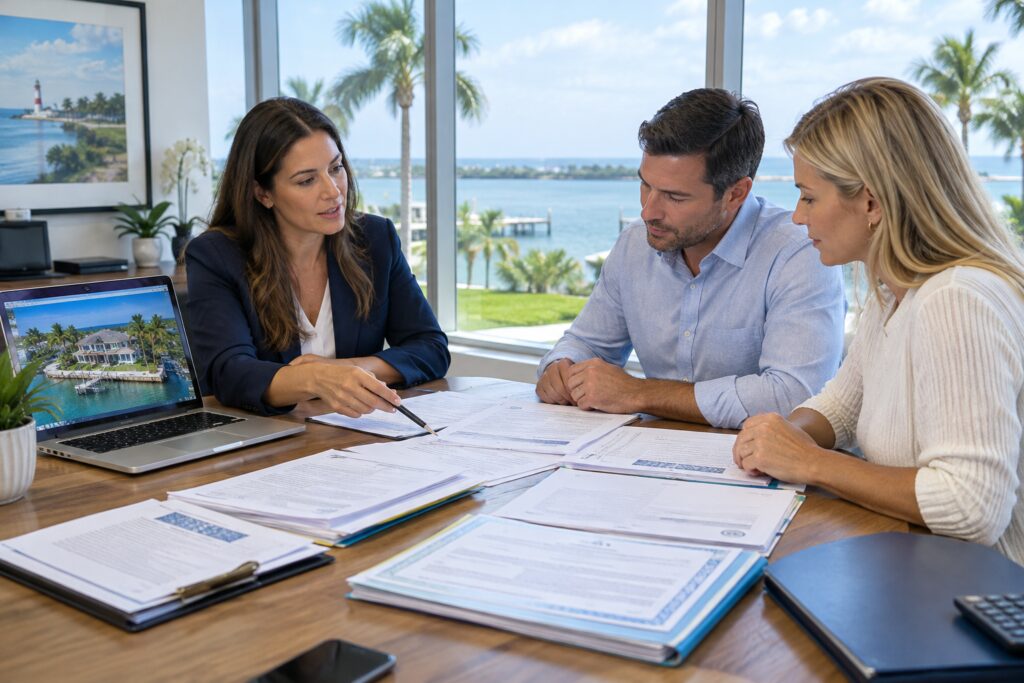
Buying a higher-priced home on Vero Beach’s barrier island or in a mainland neighborhood near the Indian River Lagoon can look simple on a preapproval letter, but coastal closings live or die on the details lenders and title companies verify after the contract is signed. Jumbo buyers in 32963 often run into the same friction points: reserve requirements that are tighter than expected, appraisal sensitivity for waterfront and near-water homes, Florida documentary stamp and intangible tax calculations, insurance holdbacks when a roof or wind-mitigation file is incomplete, and HOA estoppel fees that can change the final cash-to-close number without warning. A clean offer is only the starting point.
What jumbo underwriters check before they approve a coastal loan
A lender financing a Vero Beach property with Jumbo Mortgages is not just reviewing income and credit. Coastal real estate brings a second layer of scrutiny because the property itself can affect collateral risk. On the barrier island, underwriters pay close attention to flood insurance evidence, roof age, window protection, seawall condition, and whether the home’s insurability matches the market value supported by the appraisal. If the property sits in AE rather than X, or if the condo is subject to new milestone inspection findings or reserve shortfalls, the lender may ask for more documents before issuing a final clear-to-close.
- Reserves: Many jumbo programs require several months of PITI after closing, and coastal properties can trigger larger reserve demands when insurance costs are high.
- Appraisal support: A recent remodel does not guarantee value if nearby comps are limited or if the property fronts water, a canal, or protected lagoon land.
- Insurance readiness: Wind and flood quotes need to align with the loan file before underwriting will treat the payment as final.
- Property condition: Older roofs, deferred maintenance, or pending permit issues can slow approval even when the borrower is otherwise strong.
Closing costs in Florida that can change the day before settlement
The number on the lender estimate is not the final number until title has cleared the association, county, and tax pieces. Florida buyers should treat Closing Costs as a moving stack rather than a single fee. In Indian River County, the settlement statement usually has to account for documentary stamp tax on the deed, documentary stamp tax on the mortgage, the Florida nonrecurring intangible tax on the new note, title premiums, recording charges, and any HOA or condo estoppel fee requested by the association. If the property is in a condo or planned community with a special assessment, that assessment may need to be credited, prorated, or paid at closing depending on the contract terms and the association’s rules.
- Deed documentary stamps: typically calculated on the purchase price and confirmed by the title company at closing.
- Mortgage documentary stamps and intangible tax: assessed on the loan amount for financed purchases, which is why a jumbo loan can carry meaningful tax impact.
- HOA estoppels: show unpaid dues, fines, transfer charges, and special assessments before the seller can deliver clean title.
- Insurance holdbacks: may be used when the insurer needs proof of completed wind-mitigation work after closing or when a policy must be bound with conditions.
All-cash purchases are not document-free. Title companies in Vero Beach typically want a current bank statement or asset statement, a source trail for large deposits, and secure wire verification before they release closing instructions. That proof-of-funds review protects both the buyer and the closing agent, especially when funds are moving from brokerage accounts, business accounts, or out-of-state banks.
4-point buyer due-diligence checklist before you wire funds
- Price the insurance first. Ask your insurance agent to quote the home as it will be insured, not just as it is listed. If the property is in AE, on the barrier island, or near the Indian River Lagoon, get flood and wind coverage figured out early.
- Order association documents immediately. For condos and HOA communities, request the estoppel, budget, bylaws, rules, and any special assessment notice as soon as the contract is signed so there is time to review the numbers before the inspection period ends.
- Review the full cash-to-close sheet. Confirm deed stamps, mortgage stamps, intangible tax, title premium, lender fees, inspections, prorations, and any reserve deposits before you assume the wire amount is fixed.
- Prepare a clean proof-of-funds package. Use recent statements, keep large transfers traceable, and verify wiring instructions by phone with the closing agent before sending money.
Final Considerations for Vero Beach Buyers
The smoothest coastal closings in Vero Beach happen when financing, association paperwork, insurance, and tax calculations are treated as one coordinated file, not separate tasks handled at the last minute. That matters even more on the barrier island, where flood zones, older roofing systems, condo milestone reviews, and association records can change the timing and price of settlement. For tailored guidance and experienced local representation, connect with MacEvoy Real Estate Co. to protect your coastal investment.
FAQ
Can a jumbo loan close on a Vero Beach home in an AE flood zone?
Yes, but the lender will usually require flood coverage, may review elevation and roof age, and can ask for extra reserves or revised terms if the policy or appraisal shows elevated risk. A strong borrower can still face delays if insurance is not fully in place before underwriting issues final approval.
Why do all-cash buyers still need proof of funds in Indian River County?
Title companies and sellers need to verify the money is available and sourced legally. Recent bank or brokerage statements, retirement account confirmations, or liquid asset letters are better than screenshots, and large transfers should be traceable before the wire is sent.