On the mainland side of Vero Beach, the difference between a smart purchase and a drainage headache often comes down to whether the lot sheds water cleanly, the setbacks leave room for future improvements, and the roof system is built for Florida wind rather than just Florida weather. Buyers comparing master-planned communities along 58th Avenue and SR 60 with acreage in Sebastian or Fellsmere need to read the parcel like an engineer would: where stormwater exits, how close the house sits to easements, whether the floor elevation is high enough for comfort in summer storms, and whether the structure has the documentation to prove it can stand up to coastal wind fields even miles inland.
Reading the Lot: Swales, Easements, and Grading on the SR 60 and 58th Avenue Corridor
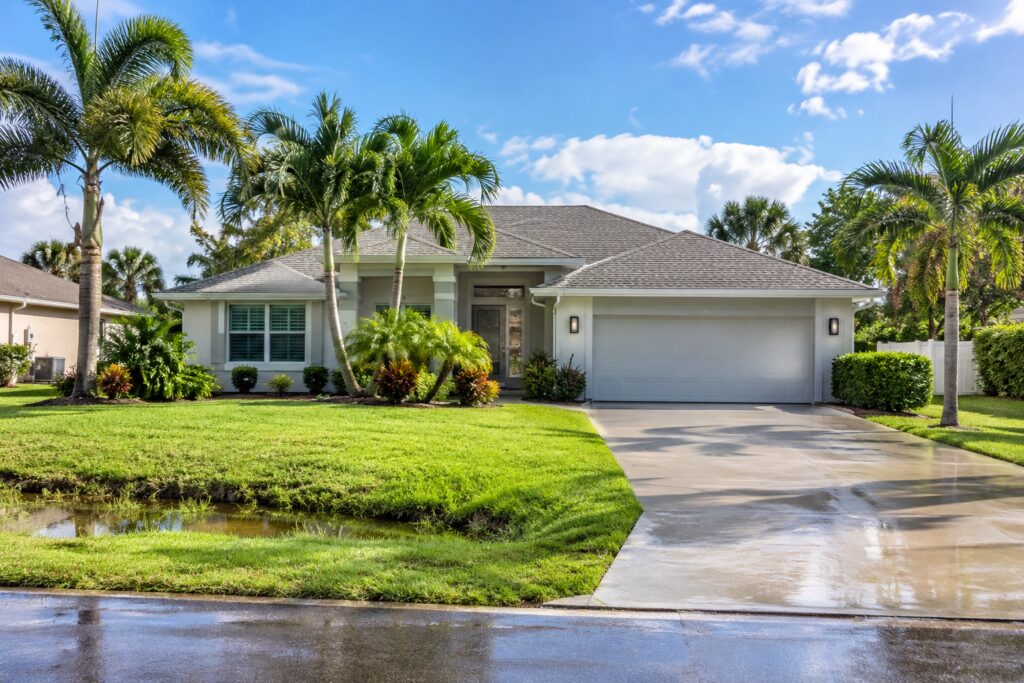
Mainland neighborhoods off 58th Avenue and Route 60 often look simple from the street, but the real story lives in the grading plan. Indian River County expects residential parcels to manage runoff without creating a nuisance for neighboring lots or public drainage paths, which makes swale condition more than a curb appeal issue. A swale that has filled in with mulch, landscape rock, or overgrown turf can redirect water toward the driveway, garage slab, or rear patio during a summer downpour. Before closing, buyers should ask for a survey, look for drainage easements, and confirm that any fence, shed, or paver addition is not blocking the intended flow line.
This is where Mainland Vero Beach buyers gain an advantage by slowing down and checking the parcel specifics instead of assuming every subdivision lot behaves the same. A newer master-planned community may have engineered drainage, while a nearby parcel with a similar lot size may rely on a very shallow swale and a tighter maintenance schedule. If the home sits in or near an AE flood zone, the elevation certificate matters because the insurance conversation changes quickly once the finished floor sits below the expected benchmark. If the map shows X, that is better on paper, but X does not erase poor drainage or a low spot at the rear property line.
Property tax math matters too. Indian River County’s millage is set annually, and the buyer should separate the countywide rate from school, municipal, and any special district charges that may apply to the parcel. The question is not just what the current tax bill shows, but how reassessment, exemptions, and local assessments will affect the first full year of ownership. A clean drainage plan and a predictable tax profile are both part of the monthly carrying cost.
Outside the Barrier Island: Wind-Mitigation Standards, Zoning Limits, and Acreage in Sebastian and Fellsmere
Non-HOA acreage in Sebastian and Fellsmere can offer real flexibility, but only if the zoning and construction standards match the buyer’s plans. Rural residential parcels may allow more outbuildings, gardens, or equipment storage, yet setbacks, access requirements, septic compatibility, and parcel-specific use restrictions still control what can legally happen on the land. Buyers should verify whether the property is in a county zoning district that limits accessory structures, whether any agricultural use is grandfathered, and whether future improvements will require permits that could trigger new engineering or drainage reviews.
Wind protection is just as important outside the barrier island as it is near the Atlantic. A house that carries a Wind Mitigation report with documented roof-to-wall connections, a secure roof deck, protected openings, and proper secondary water resistance is usually easier to defend with insurers and easier to underwrite at resale. In practical terms, that means the buyer should inspect the attic if possible, confirm the age and installation details of the roof, and ask whether any replacement materials were installed under current Florida Building Code standards. A newer roof without the right fastening pattern may still leave the owner paying more than expected for coverage.
In mainland Sebastian and Fellsmere, that same discipline applies to lot improvements. A barn pad, detached workshop, or extended driveway can look straightforward until a permit review reveals setback conflicts or drainage concerns. Buyers who want non-HOA freedom should make sure the freedom they are buying is real, not just assumed from the absence of an association.
Four-Point Mainland Buyer Due Diligence Checklist
- Order and read the survey, elevation certificate, and any drainage easement documents before making assumptions about the lot’s usable area.
- Verify flood mapping, especially whether the parcel sits in AE or X, and confirm how the floor elevation and insurance quote align with that designation.
- Review zoning, setbacks, and any deed restrictions for accessory structures, fencing, parking, or future additions on acreage or master-planned lots.
- Request roof age, permit history, and wind mitigation documentation so you know whether the home meets current Florida structural expectations and what insurance will likely require.
Final Considerations for Vero Beach Buyers
Mainland single-family living in Vero Beach rewards buyers who focus on the unglamorous details: drainage that works in a summer storm, zoning that matches intended use, construction that satisfies wind and insurance requirements, and tax obligations that fit the true carrying cost. The best properties on the mainland side of Indian River County are not just well located; they are well documented, properly graded, and legally compatible with the way the buyer wants to live. That is especially true when comparing planned communities along the SR 60 and 58th Avenue corridor with non-HOA acreage farther west in Sebastian or Fellsmere, where parcel-by-parcel variation matters more than neighborhood marketing.
FAQ
How do I know if a mainland Vero Beach lot has swale maintenance obligations?
Start with the survey, then confirm whether the swale is private, shared, or tied to a county drainage system. If the lot is in a newer subdivision, the HOA or developer documents may spell out maintenance responsibilities. If it is an older or non-HOA property, ask the seller, county staff, and your title team to identify any recorded easements or drainage responsibilities before closing.
Are AE flood zones a dealbreaker on the mainland?
No, but they require a more careful review. An AE designation usually means the buyer should study the elevation certificate, expected flood insurance premium, and how the finished floor compares to the base flood elevation. Many mainland homes still function well in AE, but the price, insurance, and long-term maintenance should reflect that reality.
For tailored guidance and experienced local representation, connect with MacEvoy Real Estate Co. to protect your coastal investment.