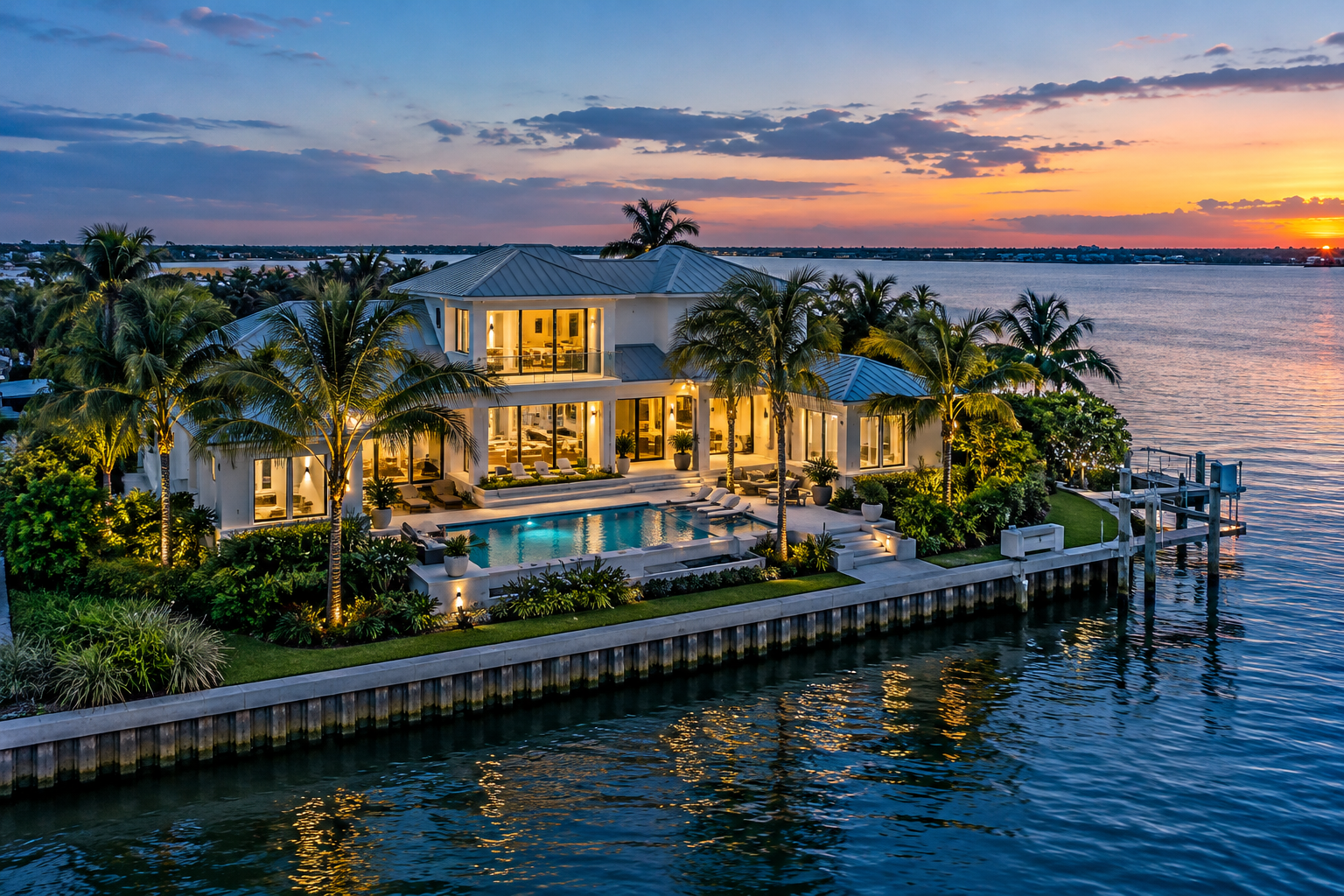
Luxury waterfront homes in Vero Beach are judged less by the view and more by how they perform when a king tide pushes into the Indian River Lagoon, a northeast wind stacks water against the barrier island, or a summer storm tests every exposed fastener and mechanical system. On the 32963 barrier island and along mainland riverfront parcels, the best estates are planned around elevation, corrosion control, and dock access from the start, because a beautiful site can become an expensive liability if the structure, finishes, and permits are not aligned with coastal reality.
Elevation Strategy: Designing for Flood Zone Reality, Not Just Water Views
In Vero Beach, the first question is not whether the home looks high from the street; it is whether the finished floor, mechanical equipment, and lower enclosures are designed for the actual mapped risk on the survey and flood certificate. When a parcel falls in an Flood Zone AE footprint, buyers should expect the conversation to center on base flood elevation, required freeboard, insurance pricing, and how the lowest habitable level is separated from storage or parking areas. A home in Flood Zone X is not flood-proof; it simply carries a lower mapped risk profile, but drainage, site grading, wind-driven rain, and surge-adjacent conditions still matter on both the barrier island and the mainland waterfront.
For luxury buyers, the practical standard is to think in terms of a 30-year salt and water horizon. That means checking whether the structure uses elevated living space, breakaway or open lower enclosures where appropriate, flood-resistant stair details, and protected placement for HVAC condensers, electrical panels, generators, and pool equipment. In Indian River County, a property that appears turnkey can still need expensive modifications if the elevation certificate, as-built floor height, and utility placement do not match the demands of coastal underwriting. The smartest purchase is the one that reduces future insurance friction while preserving the architectural quality that makes the property valuable in the first place.
Dock Engineering, Seawalls, and Salt-Resistant Finishes That Hold Up on the Lagoon
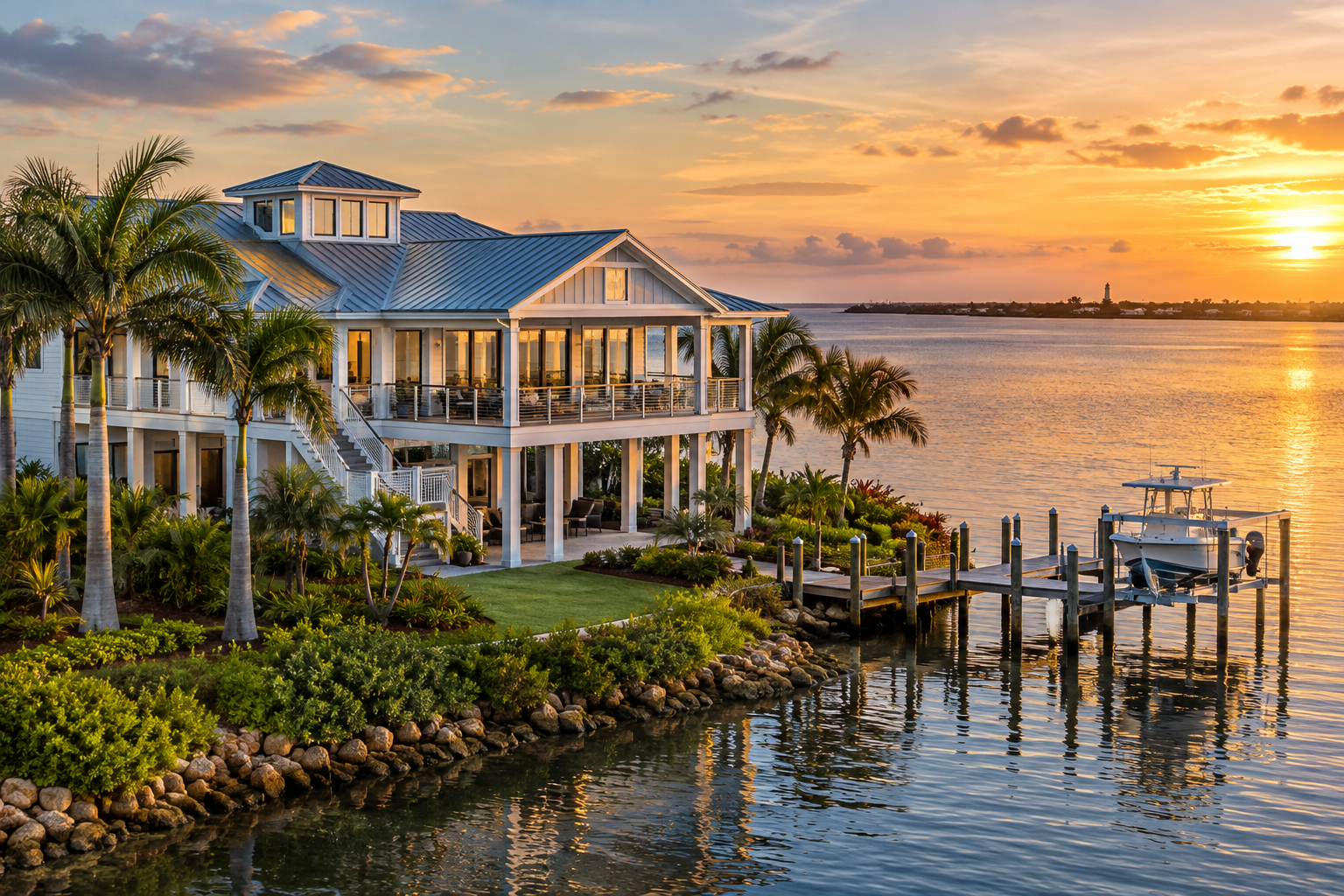
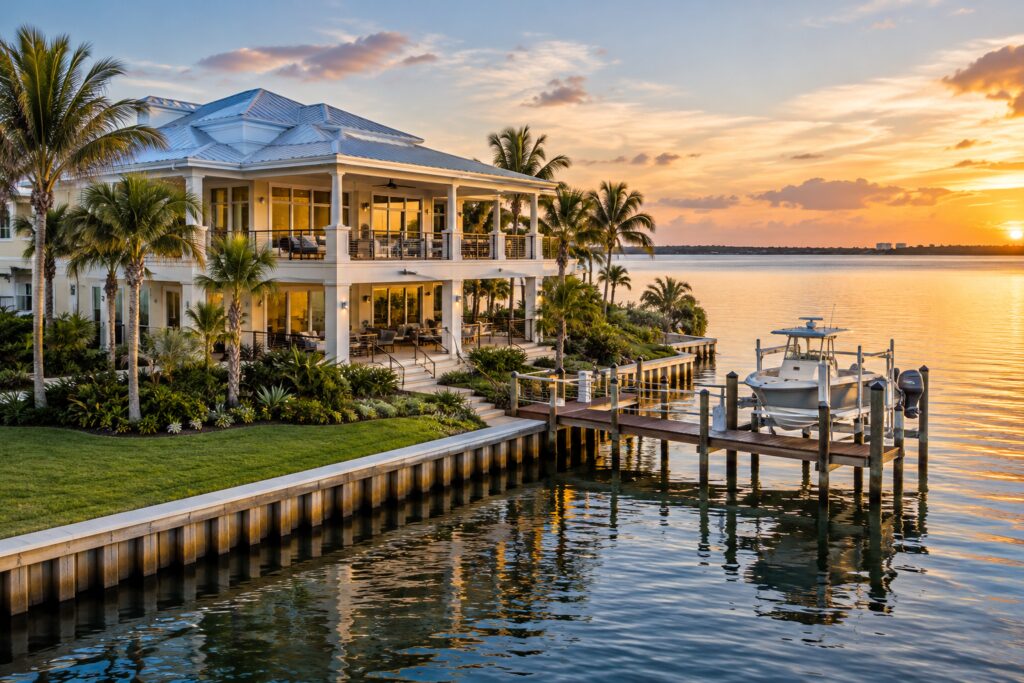
On riverfront sites, the dock is not an accessory; it is part of the asset, and it must be treated like one. A properly planned shoreline improvement can include pile-supported docks, lift systems, seawall caps, and access paths that respect riparian limits, wetlands, and marine habitat. The Dock Permitting process should be reviewed before closing, because setbacks from the mean high-water line, submerged vegetation, manatee considerations, and environmental review can alter the size, location, or timing of a project. A buyer who wants a boat lift, jet ski platforms, or a larger entertaining dock should confirm what is already approved, what is grandfathered, and what would require a new permit path.
Material selection matters just as much as permit strategy. Along the Atlantic barrier island, salt spray and ultraviolet exposure punish ordinary exterior systems, so luxury homes should lean on impact-rated glazing, 316 stainless or similarly corrosion-resistant hardware, powder-coated aluminum railings, marine-grade light fixtures, PVC or fiber-cement trim, and roof assemblies built for high wind and long-term durability. On the river side, the finish system must also resist moisture creep from the ground up, which means paying close attention to stucco transitions, sealant joints, balcony drainage, and the condition of any exposed rebar or concrete spalling. A high-end coastal exterior should look refined on day one and still look intentional after years of exposure to humidity, spray, and sun.
4-Point Due Diligence Checklist for Luxury Waterfront Buyers
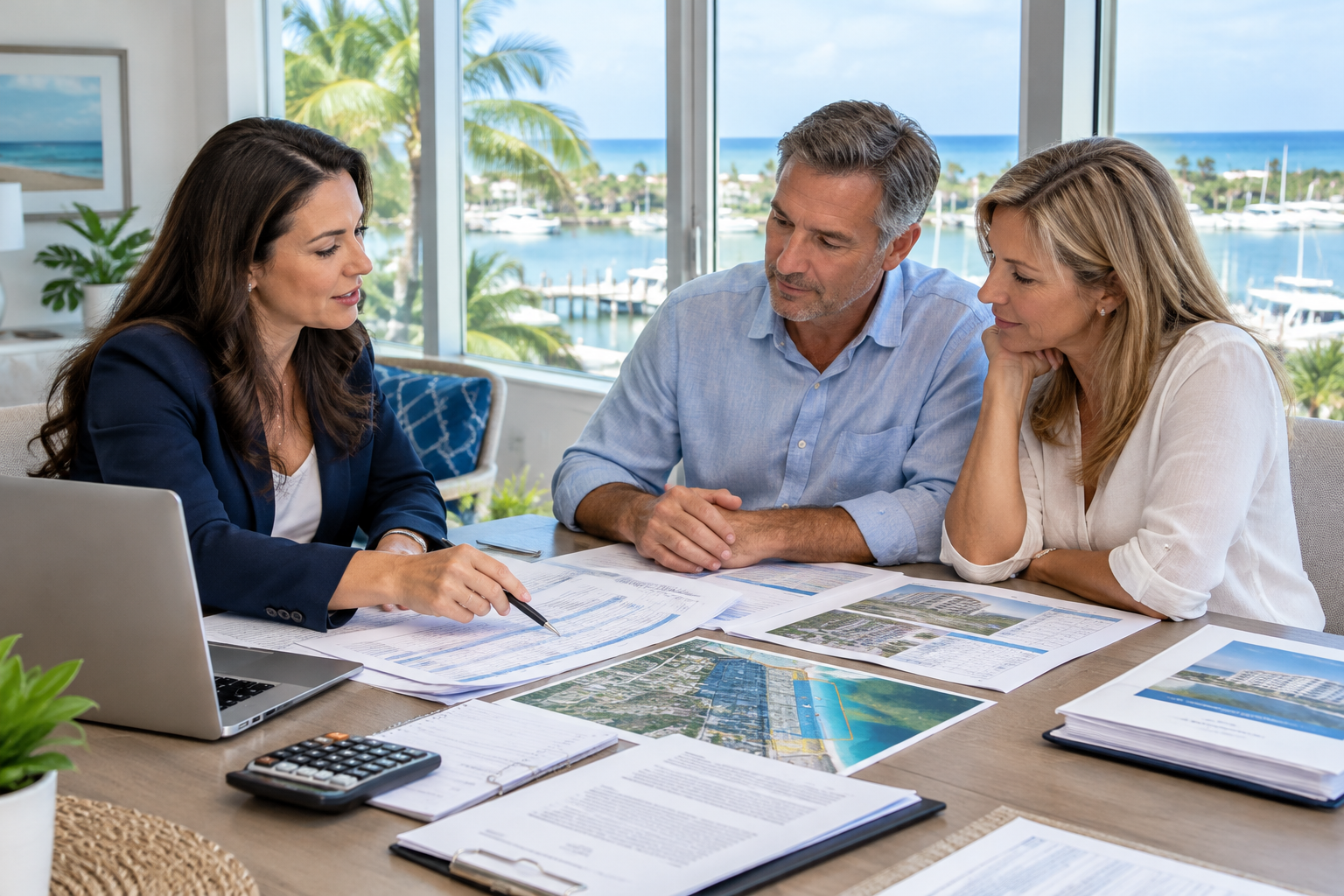
- Verify flood exposure and elevation data. Review the flood map designation, elevation certificate, base flood elevation, and current insurance quote before making assumptions about carrying costs or future mitigation needs.
- Inspect shoreline improvements and legal access. Confirm seawall condition, dock permits, riparian rights, survey boundaries, and whether any shoreline work has unresolved violations or maintenance obligations.
- Audit exterior durability systems. Examine windows, doors, roof components, railings, coatings, fasteners, HVAC placement, and generator readiness to see whether the home is actually built for coastal wear.
- Review association rules and structural oversight. If the property is in an HOA or condo community, study reserve funding, milestone inspection results, special assessments, rental restrictions, and shared infrastructure responsibilities before proceeding.
## Final Considerations for Vero Beach Buyers
The right Vero Beach waterfront purchase is the one that fits the property’s real-world exposure, not just its view corridor. Oceanfront buyers on the barrier island should prioritize wind, salt, and elevation strategy, while riverfront buyers should focus on dock permissions, seawall condition, and tidal behavior in the Indian River Lagoon. In both cases, the strongest opportunities combine durable construction, clean permitting history, and a maintenance plan that protects long-term value. MacEvoy Real Estate Co. helps buyers compare these details with local precision so the home, the site, and the ownership costs align from the start.
FAQ
What is the biggest difference between an AE flood zone and an X flood zone for luxury waterfront buyers?
AE zones generally signal a higher mapped flood risk and more demanding insurance and elevation considerations, while X zones are typically lower risk on the map. Even so, buyers should still evaluate drainage, finished floor height, and storm exposure, especially on properties near the lagoon or close to the barrier island.
Can a riverfront estate in Vero Beach automatically add or replace a dock after closing?
No. Dock work depends on surveys, riparian rights, shoreline conditions, environmental constraints, and the applicable permit path. Even well-located parcels can face design limits or mitigation requirements, so the dock strategy should be confirmed before the transaction is finalized. For tailored guidance and experienced local representation, connect with MacEvoy Real Estate Co. to protect your coastal investment.