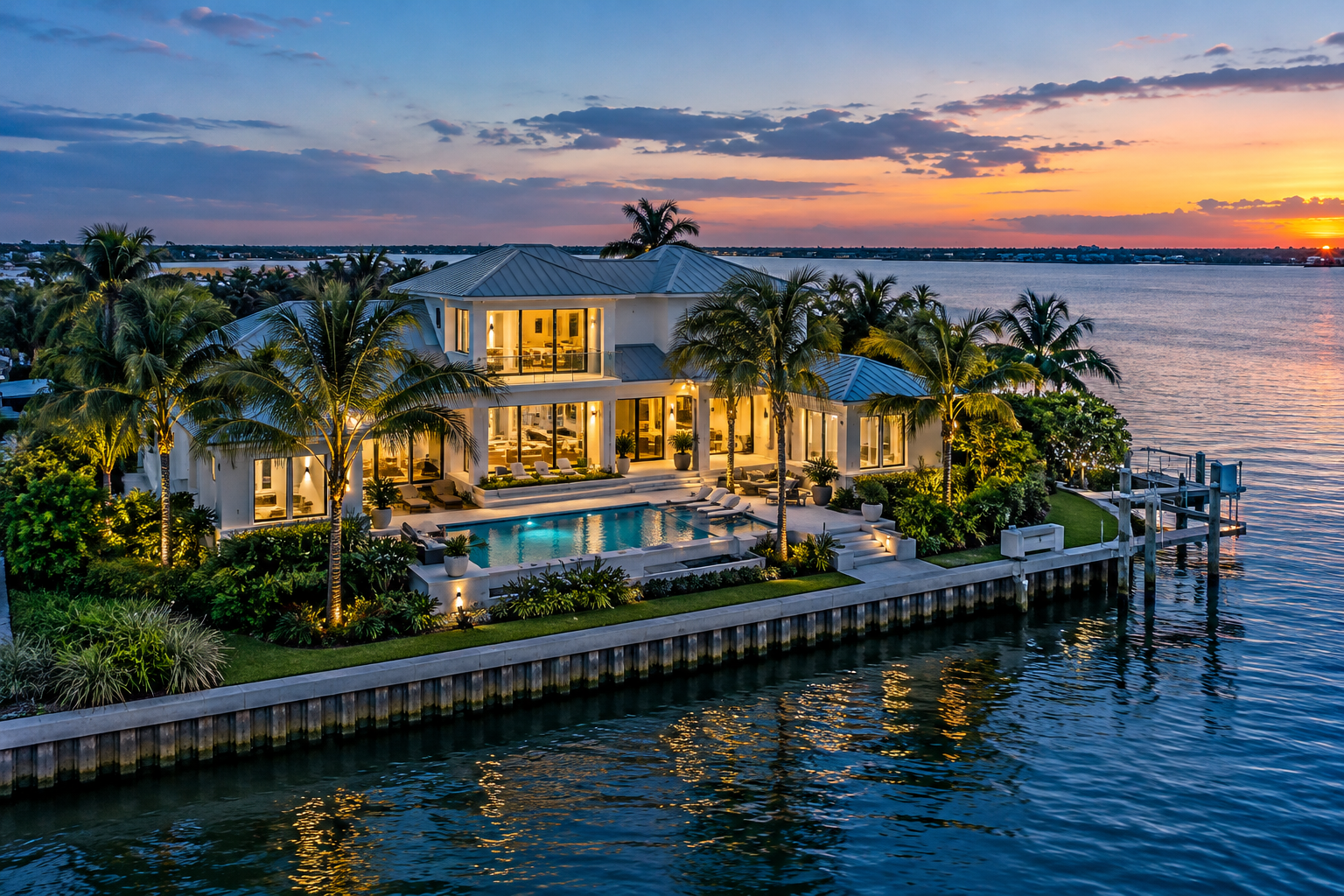
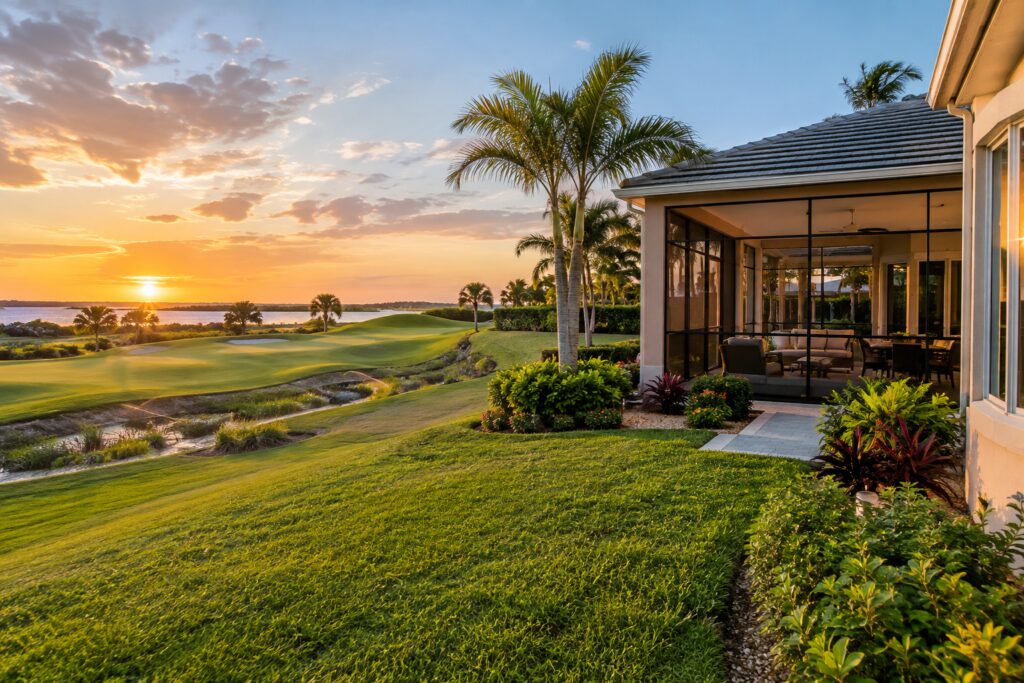
Golf-front ownership in Vero Beach looks simple from the curb, but the real question is who maintains the water, drainage, turf, and liability lines behind the view. On private fairways in Indian River County, that answer can change your monthly carrying costs, your resale audience, and even your insurance review—especially when a home sits near the barrier island in 32963 or on the mainland where club infrastructure, HOA documents, and flood maps do not always align.
Why irrigation and stormwater systems matter more than the scorecard
Private golf communities often rely on master association irrigation loops, drainage swales, pump stations, and retention ponds that serve more than the course itself. When a fairway doubles as stormwater conveyance, the homeowner is not just buying a view; they are buying into a system that can influence dues, assessments, landscape restrictions, and access for maintenance crews. In some Vero Beach communities, the HOA controls the common-area drainage while the club controls fairway turf and cart paths, creating a split responsibility that buyers should understand before they assume one fee covers everything.
That distinction matters in Golf Communities because irrigation leaks, pump failures, and drainage backups can trigger special assessments or reserve shortfalls long before a homeowner sees visible damage. Ask whether the fairways are privately maintained by the club, jointly maintained by a master association, or leased to a third-party operator. If the system serves adjacent homes, confirm whether the cost is embedded in dues, funded through reserves, or passed through via periodic capital assessments. In Indian River County, where heavy rain events and high water tables can expose weak drainage planning, a well-run system is not a luxury; it is part of the property’s financial health.
Membership structures and property rights can change your carrying costs
Not every golf or country club home in Vero Beach comes with the same club obligation. Equity memberships may create an ownership stake in the club with transfer rules, resale approvals, and potential refund language, while non-equity tiers often function more like a contract for access with different initiation fees and monthly dues. Some communities require mandatory membership for all owners; others allow optional membership but still impose use restrictions, guest policies, or minimum spending requirements that affect how often the amenities are actually practical.
That is where Country Club Real Estate becomes a legal and financial review, not just a lifestyle choice. Buyers should confirm whether the initiation fee is one-time, refundable, transferable, or waived for certain resale situations. They should also ask whether the club can change dues independently of the HOA, whether assessments can increase for capital projects, and whether a new owner must pay a transfer fee at closing. On the barrier island, where 32963 pricing already reflects coastal premiums, an unexpected club obligation can narrow financing options and reshape the property’s true monthly cost. On the mainland, a lower purchase price can still become expensive if the club documents allow broad fee escalation or require participation in a replacement reserve for amenities the buyer never intends to use.
Golf-course frontage risks that buyers should measure, not guess
Course-side homes carry two practical exposures: physical and legal. Physically, errant golf balls can damage windows, screens, roofs, and lanais, especially on lots that sit close to tee boxes, landing zones, or doglegs. Legally, setback lines, fencing rules, and construction limitations may be dictated by the community declaration, not by the buyer’s preference. Some homes back up to common area, others to easements that allow mowing equipment, irrigation repairs, or stormwater access. The farther a lot is set from the fairway edge, the less direct impact from play, but the more important it becomes to verify whether the “open view” is actually protected common space or simply an area that can change with future course redesign.
In Vero Beach, these questions also intersect with flood zone review. A fairway home in AE may face different insurance and elevation expectations than a similar home in X, even if both enjoy the same view. Mainland club communities may offer more flexibility on lot size and garage depth, while barrier island addresses can bring tighter site constraints, salt exposure, and higher attention to drainage performance during king tides or tropical rain bands. Buyers should never rely on the golf setting alone; they need to know where the drainage easements run, who maintains them, and whether the home’s position near the course creates noise, privacy, or damage concerns that are not obvious during a casual showing.
4-point due-diligence checklist for Vero Beach golf-front buyers
- Review the HOA, club, and master association documents together so you can see every fee, assessment trigger, transfer rule, and use restriction in one place.
- Ask for the current reserve study, irrigation maintenance plan, and stormwater responsibility map to determine who pays for pumps, drains, and fairway-related repairs.
- Confirm whether club membership is mandatory or optional, and verify whether initiation fees, monthly dues, minimum spending, or transfer charges apply at resale.
- Order a property-specific insurance and flood review, including AE versus X mapping, and evaluate the lot for errant ball exposure, setback constraints, and access easements.
Final Considerations for Vero Beach Buyers
Golf and country club homes in Vero Beach can deliver strong lifestyle value, but the real purchase decision comes down to how the community allocates maintenance, assessments, and access rights. A fairway view on the barrier island may look identical to a mainland lot at first glance, yet the governing documents can produce very different carrying costs, repair obligations, and resale expectations. Buyers who verify irrigation and drainage responsibility, club membership structure, transfer fees, flood zone status, and lot-specific liability concerns will make a more durable decision than buyers who focus only on the view or the clubhouse. In Indian River County, the smartest purchase is the one where the documents match the lifestyle and the monthly numbers make sense long after closing. For tailored guidance and experienced local representation, connect with MacEvoy Real Estate Co. to protect your coastal investment.
Frequently Asked Questions
Are club initiation fees always due when I buy a golf-course home in Vero Beach?
No. Some communities require a mandatory initiation fee at purchase, while others only require dues if you elect membership. The controlling documents determine whether the fee is transferable, refundable, discounted on resale, or waived under specific circumstances.
How do I know if a golf-front home has stormwater or irrigation risk?
Review the HOA and club documents, ask for maintenance maps, and confirm who is responsible for pumps, drains, and retention areas. If the property is in or near AE flood zones, add an elevation and insurance review before you commit.