On the mainland side of Vero Beach, the strongest offer is not always the house with the newest cabinets; it is the one with a clean drainage swale, a believable elevation story, and roof-to-foundation details that keep insurance from turning into a second mortgage. Buyers moving between the 32963 barrier island and mainland streets off 58th Avenue or State Road 60 often discover that the biggest cost difference is not granite or flooring; it is how the lot handles rain, wind, and code compliance after closing. In the older pockets toward Sebastian and Fellsmere, acreage and flexibility can be a real advantage, but only if drainage, zoning, and permit history are checked before the deposit clears.
How Swales, Easements, and Lot Grade Control Mainland Home Usability
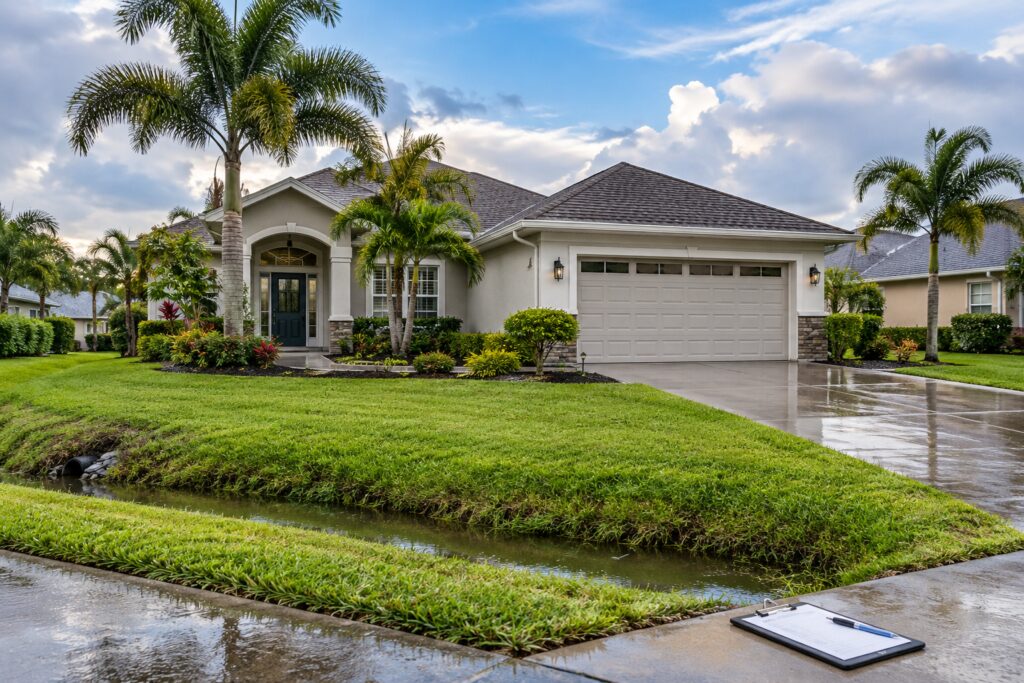
Buyers focused on Mainland Living often like the lower-cost entry point compared with the barrier island, but Indian River County’s drainage design is what protects that value. On many plats, the front or side swale is part of the stormwater system, not extra yard space, so the slope must keep water moving away from the slab and toward the approved outlet after a hard rain.
That is why stormwater drainage and lot grading should be reviewed before you close. If a seller has added fill, leveled the swale, extended pavers, or installed a fence where runoff is supposed to pass, you may inherit a correction notice, puddling in the rainy season, or a fight with the county after closing. Ask for the survey, ask how the yard drains during a 20-minute downpour, and confirm whether any easement limits how far you can expand patios, plant hedges, or build a shed.
In master-planned neighborhoods, the HOA may handle certain front-yard standards, but the county still cares about drainage function. In non-HOA acreage, the responsibility shifts more heavily to the owner, which makes the original grading plan, permit history, and any driveway culvert documentation worth reviewing line by line.
Zoning, Millage, and Structural Standards That Shape Ownership Costs
Single-family homes in Indian River County do not all live under the same rulebook. A planned subdivision off 58th Avenue may have deed restrictions, setback standards, and architectural review, while acreage in Sebastian or Fellsmere may allow more freedom for workshops, boats, RVs, or animals if the zoning district and lot size support it. Before you write the offer, confirm the exact land-use designation, minimum setbacks, accessory structure rules, and whether the property uses septic and well service instead of municipal utilities.
Property tax planning matters just as much as zoning. The millage rate is only part of the bill; school, county, city, and special assessments can all affect the final escrow number, and a homestead exemption or recent reassessment can change the picture for the next owner. If the seller’s annual tax bill looks unusually low, do not assume your bill will match it.
Structural standards matter too, even far from the barrier island. Roof age, shingle condition, permit records, truss attachment, opening protection, and garage door bracing all affect wind mitigation results and, in turn, insurability. A newer roof with a clean permit file can outperform a cosmetically updated home that lacks documentation.
4-Point Mainland Single-Family Home Buyer Due Diligence Checklist
- Verify the flood zone, elevation, and drainage pattern. Compare AE versus X, ask for an elevation certificate if one exists, and walk the property after rain if possible.
- Review the survey, plat, and any easements. Confirm where the swale sits, whether fences or pavers interfere with runoff, and whether setbacks allow your planned improvements.
- Inspect the roof and wind-mitigation records. Look for the roof age, permit history, roof-to-wall connection details, secondary water resistance, and garage door reinforcement.
- Confirm zoning, taxes, and utility setup. Check whether the home is in a city or unincorporated area, estimate the full millage impact, and verify septic, well, or municipal service before you close.
Final Considerations for Vero Beach Buyers
Mainland Vero Beach can deliver excellent value, but only if the property’s drainage, zoning, and construction history make sense for the long term. The homes with the smoothest ownership experience are usually the ones where the lot grade works, the flood designation is understood, the roof file is complete, and the land-use rules match the way you actually plan to live. Master-planned communities off 58th Avenue and Route 60 offer predictability, while Sebastian and Fellsmere acreage can offer flexibility if you are willing to do the due diligence that non-HOA land requires. For tailored guidance and experienced local representation, connect with MacEvoy Real Estate Co. to protect your coastal investment.
Frequently Asked Questions
Is an X flood zone always cheaper than AE on the mainland?
No. X zones often carry lower perceived risk, but lenders and insurers still look at the home’s elevation, roof history, proximity to drainage paths, and any local flooding history. An AE home with solid elevation and mitigation records can sometimes be easier to insure than a poorly documented X-zone property.
What should buyers check on acreage in Sebastian or Fellsmere?
Confirm zoning, setbacks, septic and well status, permitted outbuildings, driveway access, and whether any agricultural or accessory uses require approvals. Acreage can offer more freedom, but only if the survey, permits, and site drainage all align with your plans.